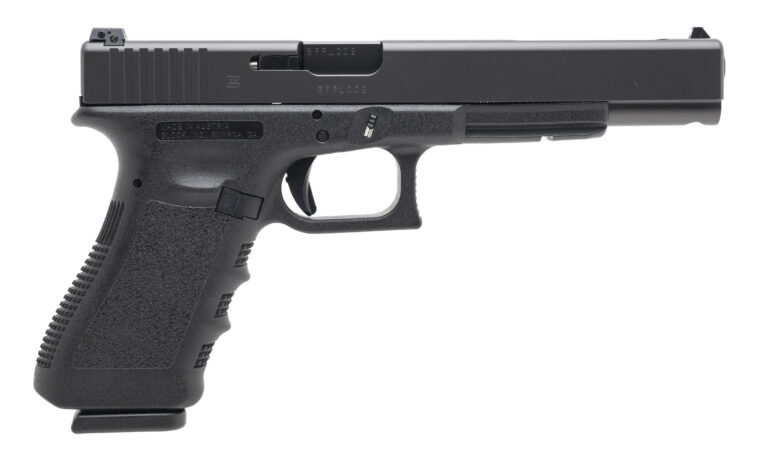
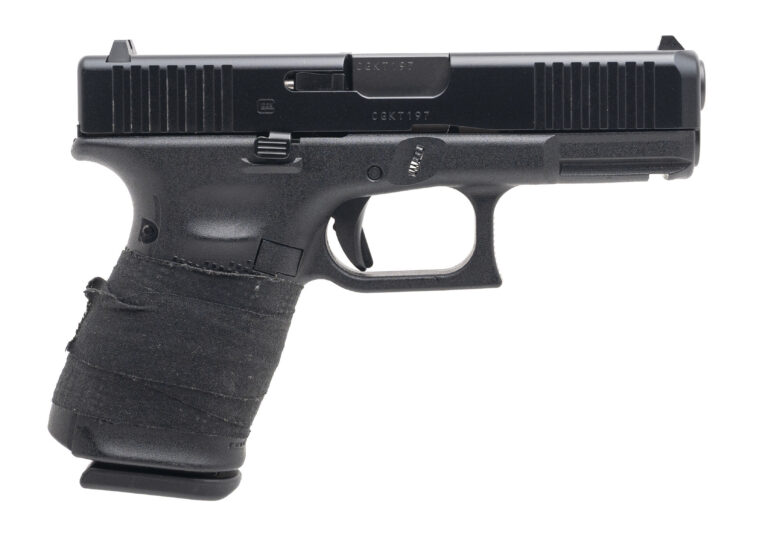
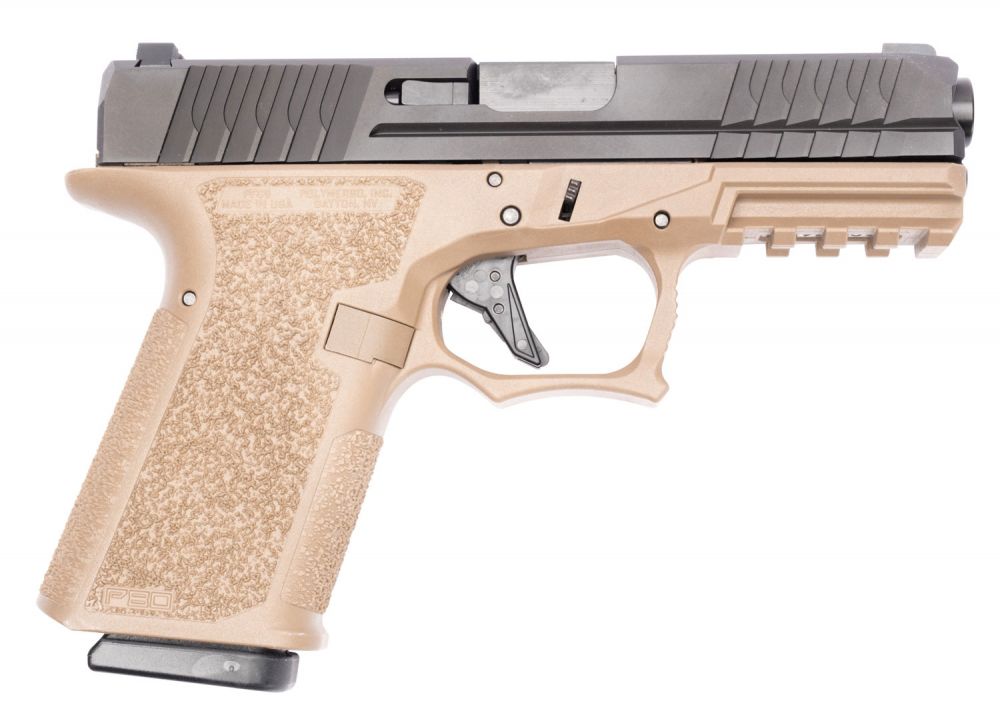
Glock parts diagram: every part named, assembly by assembly
A Glock has about 35 parts, and Glock numbers them on the exploded diagram in every owner's manual. Knowing the names and the groups makes ordering parts easy and makes the detail strip make sense. This page walks the diagram assembly by assembly, in Glock's own numbering order for the standard-frame 9mm pistols, and says what each part does. Generation and caliber variations are noted where they matter.
The slide group
- 1 Slide: the steel upper that carries the barrel, striker and extractor. Generation and model specific.
- 2 Barrel: model and generation specific; Gen 5 uses the Marksman Barrel.
- 3 Recoil spring assembly: single spring on a polymer rod through Gen 3, dual captured assembly on Gen 4 and Gen 5, none interchangeable.
- 4 Firing pin, or striker: the rod that hits the primer; its lug is what the trigger bar holds.
- 5 Spacer sleeve: polymer tube behind the striker spring.
- 6 Firing pin spring: drives the striker; about 5.5 pounds factory.
- 7 Spring cups: two halves that hold the spring on the striker.
- 8 Firing pin safety and 9 its spring: the plunger that blocks the striker until the trigger bar lifts it.
- 10 Extractor: pulls the fired case; caliber specific, LCI or plain, Gen 5 separate.
- 11 Extractor depressor plunger, 12 its spring and 13 the spring-loaded bearing: tension the extractor; the bearing matches the extractor type.
- 14 Slide cover plate: the polymer plate at the rear of the slide.
- 15 Rear sight and 16a Front sight with 16b its screw: the sights; same dovetail across generations.
- Firing pin channel liner: the pressed-in plastic tube the striker rides in, not numbered on some diagrams.
The frame group
- 17 Frame, or receiver: the serialized polymer part; the one part that is legally a firearm.
- 18 Magazine catch and 19 its spring: small on Gen 1 to 3, large reversible on Gen 4, a different reversible on Gen 5.
- 20 Slide lock and 21 its spring: the lever you pull down to field strip; leaf spring through Gen 4, coil on Gen 5.
- 22 Locking block: the steel block the barrel lug cams against; two-pin and three-pin versions by generation.
- 23 Locking block pin: the upper pin on three-pin frames, absent on Gen 1 and Gen 5.
- 24 Trigger pin: holds the trigger and the slide stop lever.
- 25 Trigger housing pin: holds the trigger housing; longer when a backstrap is fitted.
- 26 Slide stop lever and 27 its spring: locks the slide back on an empty magazine; ambidextrous on Gen 5.
- Backstraps and beavertail backstraps: Gen 4 and Gen 5 only.
The trigger group
- 28 Trigger with trigger bar: the shoe with its safety blade, pinned to the steel bar whose rear cruciform holds the striker and whose ramp lifts the firing pin safety.
- 29 Trigger spring: the coil that pulls the bar rearward; NY1 and NY2 modules replace it.
- 30 Trigger mechanism housing with ejector: the polymer block that holds the connector and the shelf the cruciform rests on; the ejector is molded in and is caliber specific, 336 for 9mm through Gen 4, 47021 for Gen 5.
- 31 Connector: the angled steel strip that sets pull weight; minus, dot, plus.
The magazine
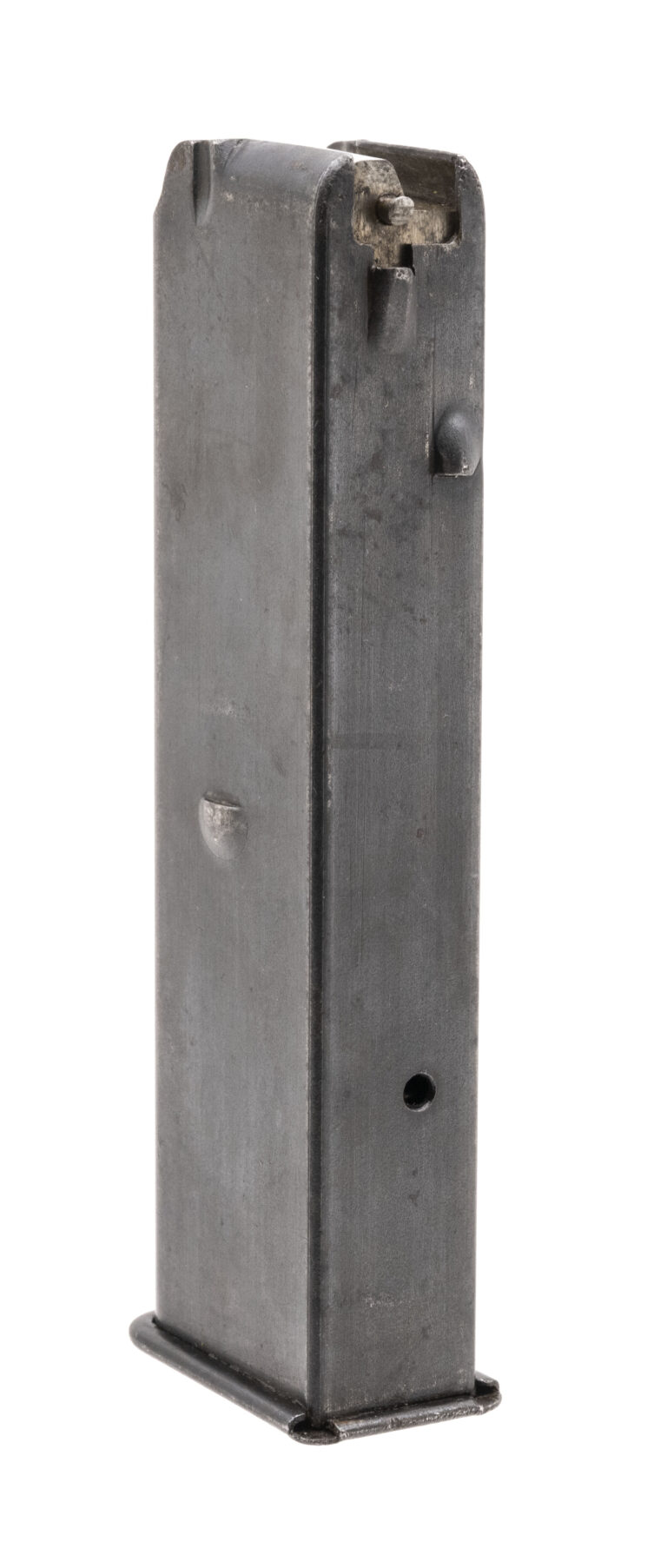
- 32 Magazine body with its steel liner.
- 33 Follower: numbered by caliber and revision; orange on Gen 5 9mm.
- 34 Magazine spring.
- 35 Magazine floorplate and 36 its insert: the plate and the small block that locks it.
Caliber and frame-size variations
The numbering above is for the standard-frame 9mm pistols. The .40 S&W and .357 SIG pistols share the frame and most parts but use their own barrels, extractors, ejectors and magazines, and the .40 uses a heavier recoil spring in the same assembly. The 10mm and .45 ACP large-frame pistols share their own set: wider slides and frames, their own locking block, extractor, ejector housing, magazine catch and magazines, with a trigger bar that is wider at the cruciform. The slimline 42, 43, 43X and 48 use a smaller version of nearly every part and share almost nothing with the double stacks except sights. The .22 LR Glock 44 has a hybrid slide and its own striker. When a listing says 9mm Gen 1 to 4 it means the standard frame only; large-frame and slimline parts are always marked separately here.
Reading a part listing
A Glock part is described by its name, the caliber family it fits and the generation range. Slides, barrels and recoil assemblies add the model. When a listing here says Gen 1 to 4 it means the part crosses those four generations; Gen 5 parts are marked separately, and slimline 43, 43X and 48 parts and the large-frame 10mm and .45 parts are their own bins. Sights and magazines cross every generation of a frame size. If a listing does not say what it fits, we have not listed it.
What wears, what breaks, what stays
Knowing the numbers also tells you what to keep in the spares bag, since the parts that fail are a short list and the parts that never fail are most of the diagram. Springs wear: recoil, trigger, striker, slide lock and magazine springs, in roughly that order of frequency. The extractor, slide stop and magazine catch wear slowly. Pins walk in old frames. Everything else lasts the life of the pistol. The detail strip guide shows the order to reach each of these, the tools guide lists what you need, and OEM versus aftermarket says which bin to buy from. Browse the parts by name in the Glock parts catalog.
General information, not legal advice. Current as of September 2026. Laws change; check the official source before you act.